The Manuka tree is native to New Zealand and grows in remote bush areas. It grows up to 6 metres in height and flowers profusely.
The honey collected from the flowers of this tree is called Manuka. It is valued for its naturally occurring anti-bacterial properties. All honey has anti-bacterial properties but Manuka honey has an additional health property that other honeys don’t have and this gives it a lot more potent health properties.
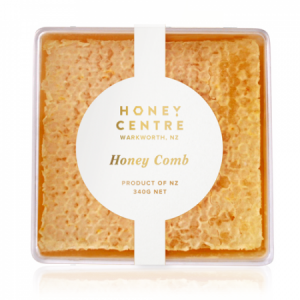
Yes. Our honey is not flash-heated and remains in its raw form. If you want the most natural form of honey, go for comb honey which is the way it is produced in the hive.
Our beekeepers situate their hives in proximity to stands of Manuka bush thereby ensuring the bees collect nectar from this source. Just as with winemakers, a beekeeper is able to tell what flowers a honey has been produced from by the colour, flavour, and texture of the honey. Bees also tend to all collect from the same type of flower at the same time.
Sometimes our honey is warmed to bee hive temperature for better handling. However it is not always necessary and we do not flash heat our honey at high temperatures for long periods as is the practise in many countries. Because of this, our honey retains its flavour whereas many people regard honey that is flash heated as being of inferior taste and texture.
You eat everything, wax and all. Many people find the wax is good for the sinuses, and you will receive lots of additional goodness from trace amounts of propolis and pollen. You can eat it with a spoon as is, spread it on toast, or top it on ice cream. The wax will roll into a ball in your mouth which you can chew like chewing gum or spit out.
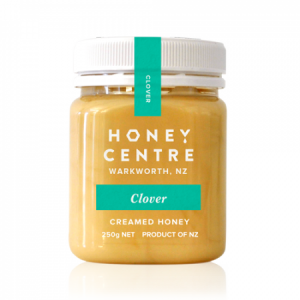
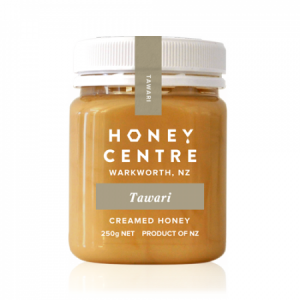
When honey is harvested from a hive it is in its liquid form. We are able to take liquid honey (also known as runny honey) and stir it. This process causes the crystal structure to break down and the honey thickens in texture and lightens in colour. This is creamed honey. Liquid honey is good to use as a drizzle, in cooking, and in hot drinks. Creamed honey is great for spreading on bread, etc.
According to the New Zealand Ministry of Health, children under 6 months of age should not be given honey. Other bee products such as propolis should not be used by young children. Always check with your health care professional before using bee products for children.
Active is the term used to describe the special health property found only in Manuka honey and not in other honeys. This active special health property has been shown to heal severe health problems. Scientists are not yet completely sure what the special property exactly is but its germ killing ability or activity can be measured against certain antiseptics and then rated for its activity. Eg 10+, 16+ etc.
Therefore some Manuka is measured or tested in a laboratory and certified to a higher level of activity such as 10+ and 16+ which are the levels of activity more suitable and effective for specific medicinal purposes such as treating ulcers and stubborn bacterial infections. Because it is tested and in demand, the prices for the Manuka honey with higher levels of activity are much dearer.
Many people buy the untested ‘ordinary’ Manuka as they find this product is sufficient for day-to-day health; the price is much more affordable and it likely contains some level of ‘activity’, albeit not tested.
This is because it contains such special ‘active’ properties for good health and well-being that people around the world find it effectively treats their health problems and keeps them healthy!
The natural state of honey is liquid. The bees keep the hive at around 35 degrees celsius to keep the brood (babies) warm. When we keep honey at anything lower than this temperature, the honey will slowly set into crystals. It is perfectly natural and can be brought back to liquid with gentle heating, such as placing the jar in a pan of hot water.
No! We are legally required to give pure honey an expiry date of 4 years, but it will never expire. In fact, honey has been found in Egyptian Pharoah Tombs opened after 2000 years and it was still in good condition and able to be eaten.
The names of the different honeys refer to the flower that the bees visited to collect nectar. The honey produced from each flower has its own unique taste. For example, Tawari has a natural butterscotch flavour, while Pohutukawa is slightly salty. They are all pure honeys.